


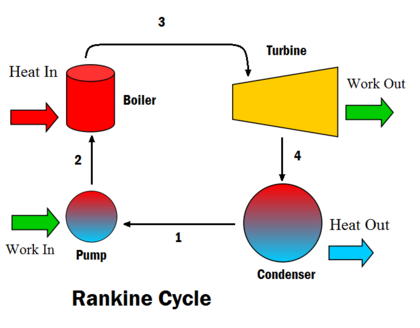
The Rankine Cycle stands as a cornerstone in the realm of thermodynamics, powering the turbines that generate a significant portion of the world’s Ncnewsupdate.com electricity. In this article, we delve into the intricacies of the Rankine Cycle, exploring its principles, applications, and the vital role it plays in harnessing the potential of steam to drive the engines of progress.
The Rankine Cycle Unveiled: A Blueprint for Efficient Energy Conversion
At its core, the Rankine Cycle is a thermodynamic process that converts heat into mechanical work, driving steam turbines in power plants. This section demystifies the four key stages of the Rankine Cycle—compression, heating, expansion, and cooling—revealing how this cyclical process efficiently transforms thermal energy into usable power.
From Steam Engines to Power Plants: Historical Evolution of the Rankine Cycle
The roots of the Rankine Cycle trace back to the 19th century, marking a pivotal shift in the history of power generation. This part of the article explores the evolution of the Rankine Cycle, from its early applications in steam engines to its modern prominence in thermal power plants. The historical journey showcases the adaptability and enduring relevance of this fundamental thermodynamic process.
Applications Across Industries: Rankine Cycle in Power Generation
The Rankine Cycle isn’t confined to a single industry; its applications span a multitude of sectors. This section elucidates how the Rankine Cycle is employed in various power generation systems, from conventional coal-fired plants to advanced nuclear and geothermal facilities. The versatility of the Rankine Cycle makes it a linchpin in the global quest for sustainable and efficient energy sources.
Efficiency Matters: Analyzing the Performance of the Rankine Cycle
In the pursuit of sustainable energy solutions, efficiency is paramount. This article examines the efficiency considerations of the Rankine Cycle, shedding light on factors that influence performance, such as temperature and pressure levels. Additionally, it explores innovations and enhancements that engineers and researchers are employing to optimize the efficiency of the Rankine Cycle for a greener energy future.
Beyond Conventional Power: Rankine Cycle in Combined Heat and Power (CHP) Systems
The Rankine Cycle’s versatility extends to Combined Heat and Power (CHP) systems, where it contributes not only to electricity generation but also to the efficient utilization of waste heat. This section explores how the Rankine Cycle enhances the sustainability of CHP systems, providing a holistic approach to energy production that maximizes resource utilization.
Challenges and Innovations: Navigating the Future of the Rankine Cycle
While the Rankine Cycle has been a stalwart in power generation, it faces challenges and opportunities in a rapidly evolving energy landscape. This part of the article examines current challenges, such as environmental concerns and the quest for higher efficiency, and explores the innovative solutions and advancements that researchers are developing to propel the Rankine Cycle into the future.
The Future Unveiled: Rankine Cycle in Next-Generation Power Technologies
As the world looks towards cleaner and more sustainable energy solutions, the Rankine Cycle continues to play a pivotal role. This section provides a glimpse into the future, exploring how the Rankine Cycle is integrated into emerging technologies, including supercritical carbon dioxide cycles and advanced geothermal systems, promising a new era of efficient and environmentally friendly power generation.
Conclusion: The Enduring Legacy of the Rankine Cycle
In conclusion, the Rankine Cycle stands as a testament to the enduring principles of thermodynamics that have powered the progress of human civilization. From the steam engines of the industrial revolution to the cutting-edge power plants of today, the Rankine Cycle remains an indispensable tool in the quest for efficient, sustainable, and reliable energy generation. As we navigate the complexities of a rapidly changing energy landscape, the Rankine Cycle continues to be a guiding force, shaping the future of power generation and contributing to the ongoing evolution of global energy systems.